
Interview with: Sonam Wangchuk (Fellow 2020-2021)
Written by: Nadeem Aiman, Hayley Lam



Interview with: Sonam Wangchuk (Fellow 2020-2021)
Written by: Nadeem Aiman, Hayley Lam
To Sonam Wangchuk (Fellow 2020-21), education equity meant providing underprivileged students with the same opportunities and resources as those who were more fortunate. It felt straightforward – if a student didn’t perform well in school, focus on helping them improve. However, it was only after spending a year as a Teach For Hong Kong (“TFHK”) Fellow that he realized the complexity of education equity and became an advocate for student-centric initiatives after his Fellowship journey.
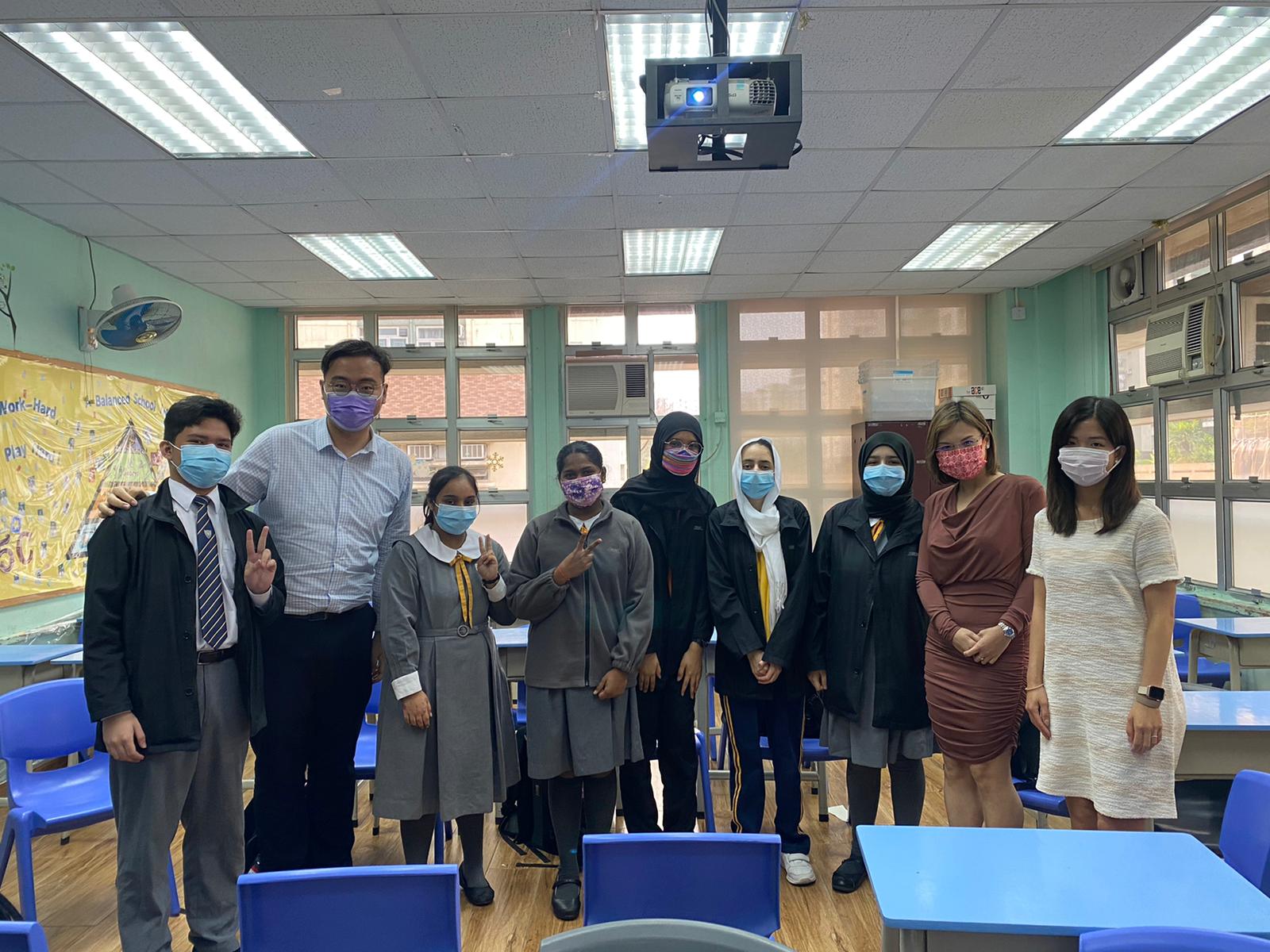
Motivated by the desire to explore the multifaceted career of a teacher, Sonam became a TFHK Fellow at Delia Memorial School (Glee Path) (“DMSGP”), serving ethnic minority students, where he taught English and Business. Growing up in Hong Kong, he saw students’ limited exposure beyond their classroom and academics, and aimed to provide diverse career-related experiences to his students as a Fellow.
Starting his journey, he expected the role to be relatively simple and was confident in his familiarity with the material. However, he quickly discovered challenges he had not bargained for. These ranged from addressing individual students’ needs outside of class, retaining their in-class engagement, deeply understanding their lives, which were shaped by commitments like part-time jobs and family responsibilities, and limiting their time to attend extracurricular or after-school activities.
Among these complex challenges, Sonam recalls one student’s situation, “An ethnic
minority student was burdened with caring for his siblings due to his parents’ full-time
jobs, and had no time to catch up on work. When I offered morning tutoring, he attended.
I assured him it was about support, not punishment. Building trust was crucial.”
Drawing on his business background, Sonam introduced career-focused initiatives to expose students to opportunities beyond academia. He partnered with companies like EY to organize mentorship sessions, guest sharing, and business case training. These initiatives made Sonam realize how little exposure students had to working professionals.
“I remember working with EY on an initiative where we discussed working as an accountant, and students didn’t have a clue what an accountant did. They spent so much of their time in school, they naturally gravitated towards working as teachers after graduation because they had limited exposure,” Sonam shared.
Other than addressing students’ limited career exposure, the mentorship program was particularly transformative for female ethnic minority students, many of whom faced expectations of early marriage. By connecting them with female role models, Sonam helped shift their perspectives. One student mentee was inspired to consult Sonam about her newfound career goal after the program.
Despite organizing cross-sector engagements, challenges persisted, such as students’ lack of commitment and students’ superficial questions, like, “How much do you earn?” Sonam also soon realized the bureaucratic hurdles he had to navigate when advocating for student-centric initiatives. TFHK’s community support and training helped Fellows gather and share strategies on preparing students for engagements to maximize their learning. Guest speakers also shared insights Sonam used for stakeholder collaboration and navigating school dynamics.
“Before I joined the Fellowship, educational equity meant empowering underprivileged
students by providing them with the same opportunities as those who were more
fortunate. But after the program, I realized it was naive to think it was only “highs and
lows,” as it is multifactorial,” Sonam said, noting that students from diverse backgrounds
start at different points.
With this shift in perspective and realization about cross-sector collaboration to enrich education for students, Sonam founded Stargazers Consultancy and Aspire to address the gaps he observed during the Fellowship. Stargazers Consulting is a platform offering career-focused training, like CV workshops and case competitions for university students, and Aspire, a nonprofit providing STEM and leadership programs for secondary school students. Post-fellowship, Sonam channeled his insights and dedicated his career to enhancing youths’ employability and access to opportunities.
Though no longer a classroom teacher, Sonam seamlessly integrated the skills honed during the Fellowship into his current work with students and youths.
Sonam’s compassion for students from diverse backgrounds, many facing unique
challenges, defines his approach. “I’ve worked with students from over thirty schools,”
he reflects. “Some excel at presenting, others struggle with English but thrive despite
their circumstances. It shows how everyone starts at different points, and we must
account for that in education.”
This perspective, shaped by the Fellowship program, underscores Sonam’s commitment to viewing students holistically, beyond academic and grades. By holding space for students’ diverse backgrounds and remaining open-minded, Sonam continues to transform lives.
Sonam’s time as a Fellow was not just a year of teaching but a journey that offered him lessons on empathy and resilience, and taught him the power of cross-sector collaboration. He emerged from the program with a nuanced understanding of educational equity and a commitment to unlocking students’ potential.
